What is the History of Counterparty?
Counterparty is one of the oldest working extensions of Bitcoin. It went live in January 2014 as a Bitcoin metaprotocol.
This means the Counterparty protocol provides extra rules written into ordinary Bitcoin transactions so people can issue tokens, trade them peer-to-peer, pay dividends, run oracles, and experiment with digital art and games.
The protocol is now 12+ years old.
Counterparty holds many records, firsts, experiments, successes and core culture in the cryptocurrency community while also remaining incredibly active to this day.
When did Counterparty start?
Development began in late 2013. The founders, Adam Krellenstein, Robby Dermody, and Evan Wagner, wanted peer-to-peer finance that Bitcoin itself did not offer yet.
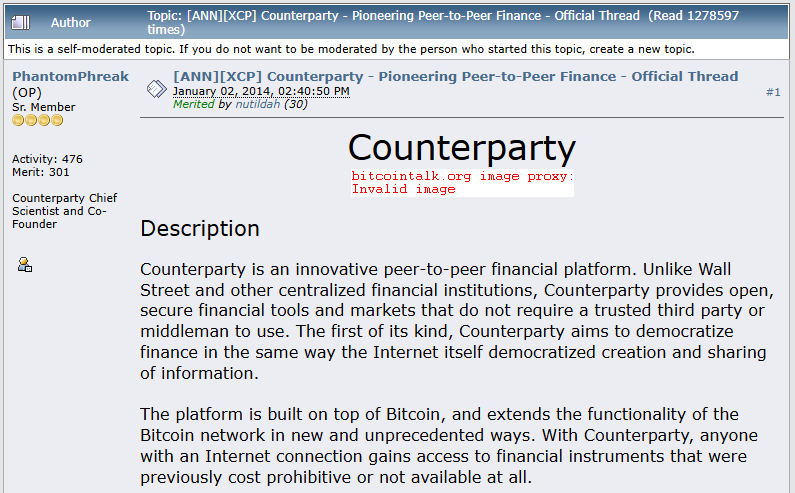
On January 2, 2014, Counterparty was announced on the Bitcoin Talk forums. That forum and that specific thread is not a side note regarding historical purposes, it is where the protocol was introduced, where early assets were debated, and where later historic cultural projects such as Rare Pepe and Spells of Genesis took shape.
For a quick overview on the first five years of Counterparty history, check out this found-footage documentary called "The First 5 Years".
What was the Proof-of-Burn?
XCP, the native token, was not pre-mined and was not sold in an ICO. It was distributed in a decentralized way by having users burn their Bitcoin for XCP.
- Between January 2 and February 3, 2014 (5,000 Bitcoin blocks), anyone could send BTC to a provably unspendable address: 1CounterpartyXXXXXXXXXXXXXXXUWLpVr
- Each burned bitcoin (1 BTC) created between 1,500 and 1,000 XCP, with the better rate going to earlier burns. About 2,130 BTC were destroyed. That created 2,648,755 XCP.
- The design was deliberate: no founder treasury, no escrow agent, full transparency.
- XCP is still the anti-spam and utility token for named-asset issuance and several protocol actions. When those fees are paid, XCP is destroyed.
What were the First Experiments using Counterparty?
The protocol was used immediately.
- Early named assets such as TEST and LEET appeared in January 2014.
- The on-chain decentralized exchange (DEx) let people trade asset-to-asset with protocol escrow.
- Dividends, broadcasts, bets, and experimental games followed the same year.
- Projects such as LTBCOIN (Let’s Talk Bitcoin), TATIANACOIN (Tatiana Moroz), SJCX (Storj), and later BITCRYSTALS (Spells of Genesis) showed that tokens could fund media, music, storage, token-controlled access, advertising slots and even fully built out mobile games.
- On June 12, 2014, OLGA was issued as a locked 1-of-1 that would include on-chain artwork. Researchers often point to it as one of the first true non-fungible tokens on Bitcoin. Years before “NFT” was a common word and even years before users cared to publish image data 'on-chain'.
- By 2015-2016, collectible and game assets were a real culture, not a demo. Spells of Genesis, Sarutobi, Force of Will emphasized this success.
- By late 2016, Rare Pepe, included submitted and curated as cards on Bitcoin, with specialized tools such as Joe Looney’s Rare Pepe Wallet.
Many of these early projects did not come from a marketing team. It grew out of the same Bitcointalk / early-Bitcoin meme culture that Counterparty itself grew out of. That is why Counterparty’s history is both protocol history and art history.
How did Counterparty grow?
Counterparty did not stay frozen in 2014. Community Counterparty Improvement Proposals (CIPs) added features as Bitcoin itself changed:
- Numeric assets and multi-sig
- Subassets (similar to parent.child names)
- Enhanced sends and memos
- SegWit addresses
- Multi-peer multi-asset sends (MPMA)
- Sweeps
- Dispensers (CIP-21, implemented by John Villar around 2019): vending-machine sales of any asset for BTC
- Later: oracled dispensers, destroy/reset tools, then the modern stack
Official Counterparty project news from that era recorded much of the publications: https://www.counterparty.io/news/
After a community push in early 2024 along with the return of Adam Krellenstein, development accelerated:
- Counterparty Core v10.0.0 (April 2024) merged and rebuilt the reference implementation
- Counterparty 2.0 / v10.4.0 (September 2024) added UTXO support, Fair Minting, and the basis for trustless atomic swaps with BTC via PSBTs
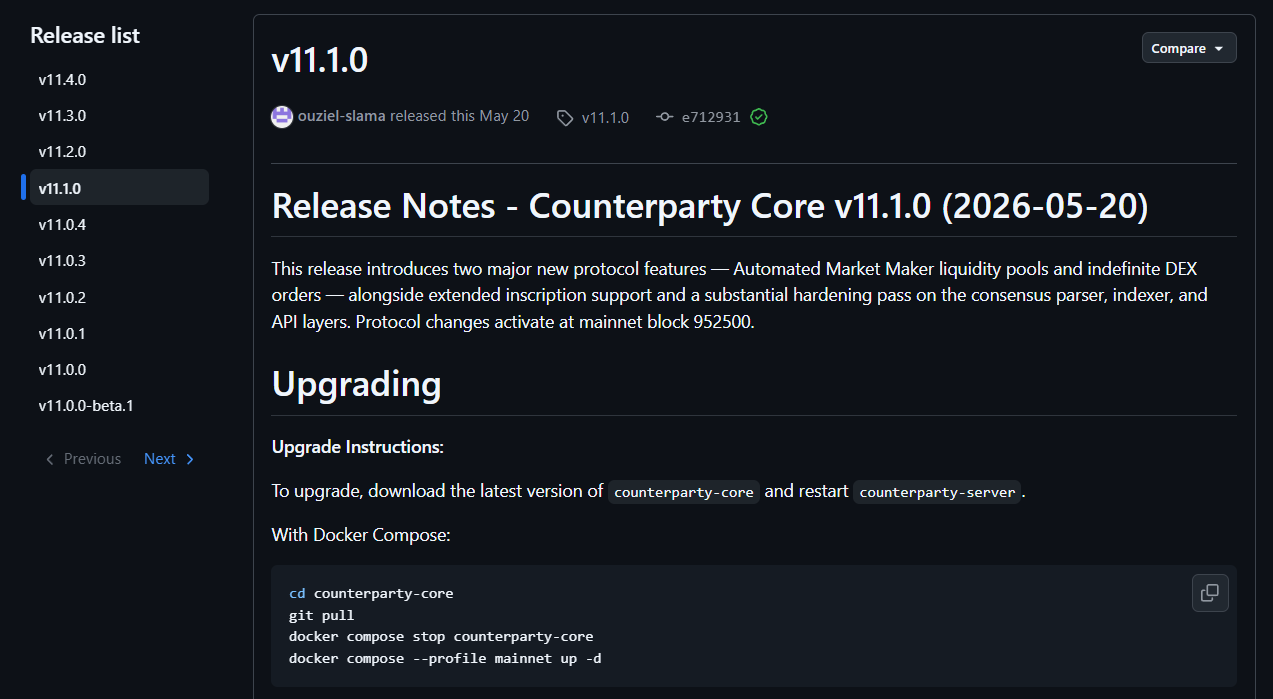
- Later releases added Taproot-related work, inscriptions, Fairmint refinements, and AMM liquidity pools that function with the classic DEx order book
Does Counterparty History still matter?
Counterparty is easy to underestimate if you only look at later chains. Many ideas people now treat as “new” were tried here first, on Bitcoin, in public and using Counterparty:
- User-issued tokens
- A DEX with protocol escrow
- Proof-of-burn distribution
- On-chain collectibles and game items
- BTC-denominated sales without a custodian
- Metadata that wallets and explorers can render
Where do I learn more?
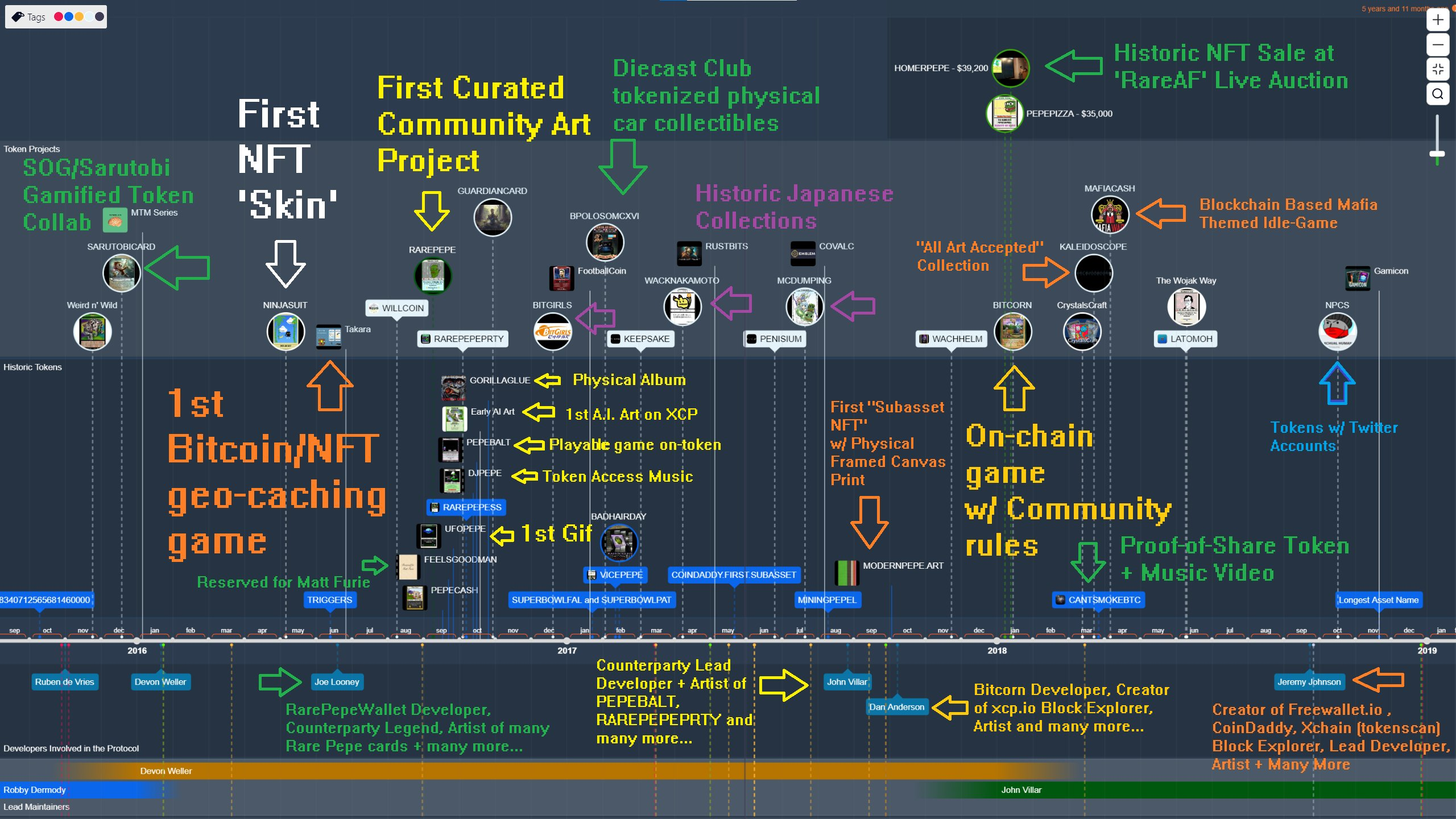
Below is screenshot of just a portion of an in-depth infographic compiled by community member 'davesta' that is a visual representation of Counterparty (XCP) history, tokens, projects, Counterparty wallets, drafted developments, protocol updates, lead developers and protocol forks.
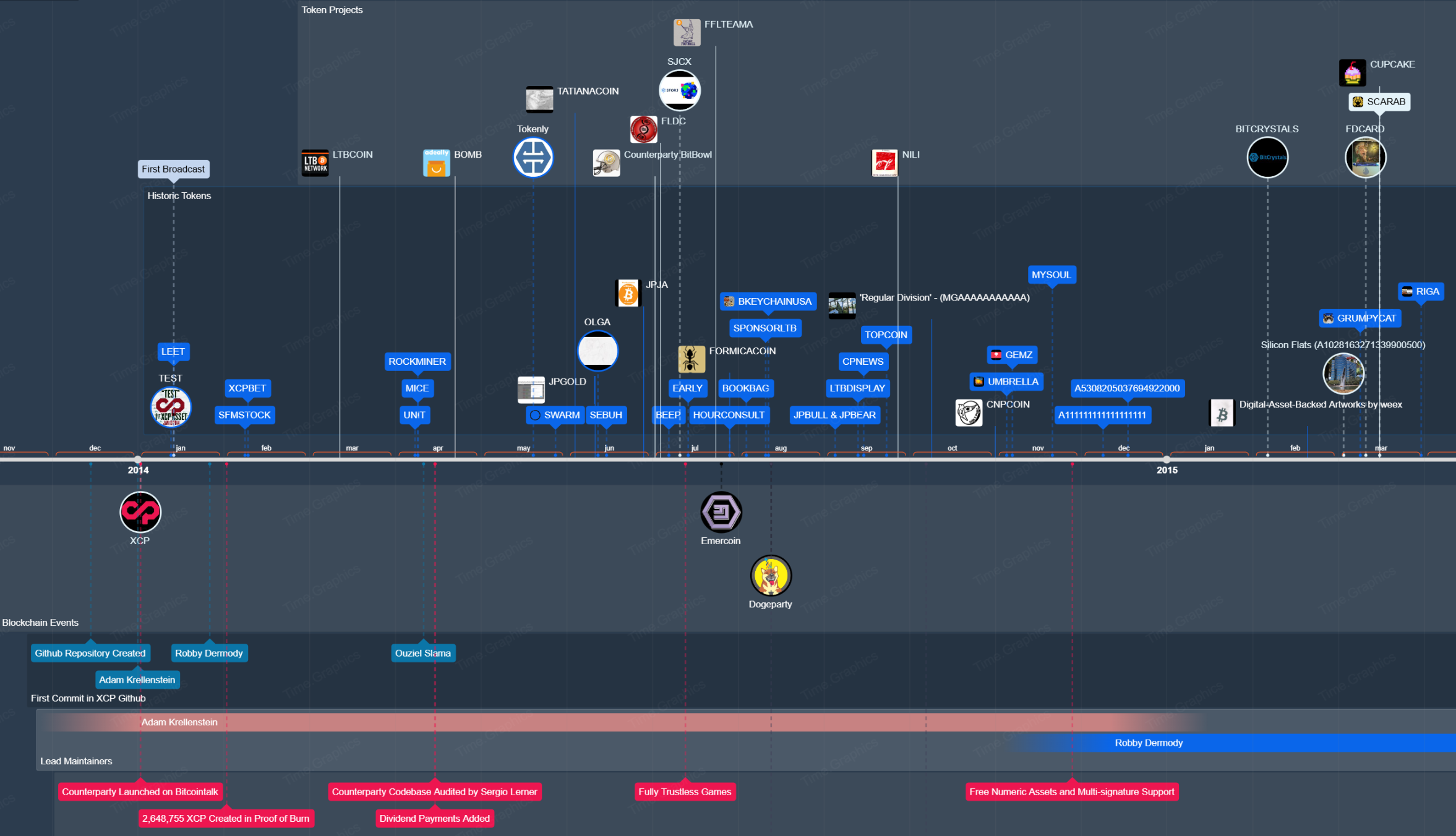
Take note, this infographic is a teaching tool, not a closed canon. Events were checked against explorers, old news, forums, and interviews, then placed on a single line so new users can see protocol changes next to cultural ones. Many projects and history is still 'unfound' and the community has been invited to help compile more information.
Start with the infographic above, the bibliography references and then focus on the people who already did the digging and places they sort information from:
- A large share of the early story is not in polished articles. It is in Let’s Talk Bitcoin, Art on the Blockchain, The Adam McBride Show, Bitcoin Uncensored, other interviews, and the original Bitcoin Talk threads.
- JP Janssen — A timeline of non-fungible tokens on Counterparty and the interactive asset timeline example: OLGA
- ZeroG — Vintage NFT Space
- Subterranean — https://subterranean.medium.com/
- Archivist — https://archiv.ist/#researches
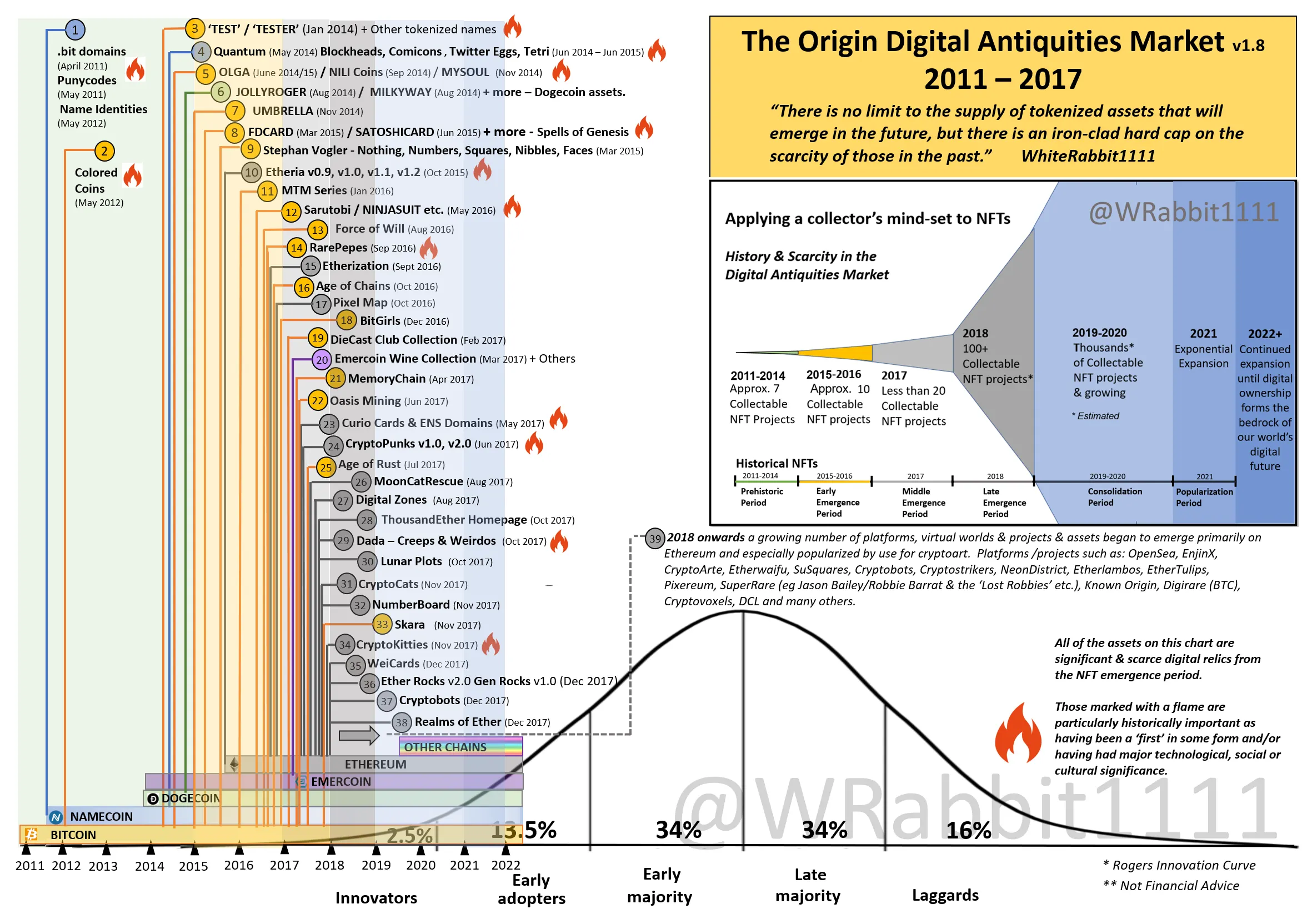
- WhiteRabbit1111 — The origin digital antiquities market (NFTs)
Much of the social history is also public. After reviewing the BitcoinTalk Forums, feel free to review the archived Counterparty Forums and take a look at the recent discussions on the Github.
Then use the chain itself: Tokenscan, xcp.io, and the other Counterparty explorers.
Due to how many tokens and experiments were created on Counterparty and how small the research community is...
It is well known that much of Counterparty history is still waiting to be found... or to be created.